
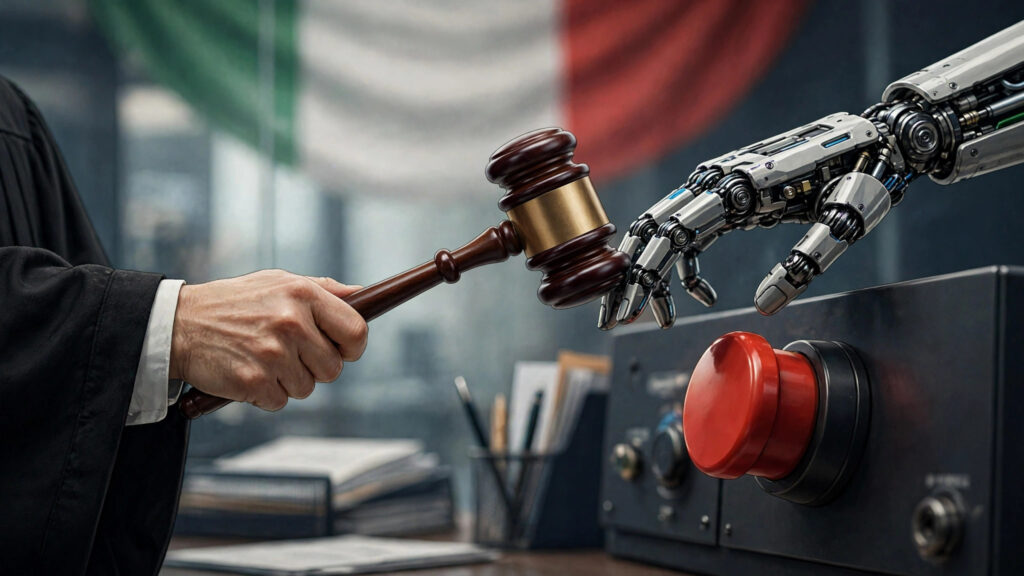
An algorithm can recommend, rank and flag — but in Italy, it can no longer fire you on its own. The country’s AI decree has taken effect as of October 23, and its headline rule for the workplace is simple: no worker may be dismissed by algorithm alone. Decisions that end someone’s employment require genuine human involvement, making Italy one of the first countries to draw a bright legal line around automated management.

What the Decree Provides
The rule targets a management style that has spread quietly through warehouses, delivery platforms, call centres and offices: software that monitors performance, allocates shifts, scores workers and — in the most automated workplaces — effectively decides who stays and who goes. Under the decree, that final step cannot rest with the machine. A human decision-maker must be meaningfully involved in dismissal decisions, which in practice means employers need review processes, documentation and accountability for outcomes that software suggests. The principle being protected is straightforward: a person losing their livelihood deserves a decision that another person can explain and defend.
Why Italy Moved First
Italy has form in this area. It was quick to challenge consumer AI services over data practices and has been among Europe’s most active countries in turning AI principles into national law, alongside the European Union’s broader AI Act, which phases in obligations for high-risk uses of AI — a category that explicitly includes employment. Algorithmic management made the issue concrete: when a delivery rider or warehouse worker is deactivated by an app with no human to appeal to, the abstract debate about AI accountability becomes very personal, very fast.
What It Means for Employers
For companies operating in Italy, the compliance work is practical. HR and operations teams must map where algorithms influence hiring, evaluation and termination, insert human review where the law requires it, and keep records that show the review was real rather than a rubber stamp. Multinationals should pay attention: rules pioneered in one EU state have a habit of travelling, and vendors of HR software will now compete on audit trails and override controls as much as on analytics.
The decree also lands in a bigger week for AI governance. While AI companies set record lobbying highs in Washington, arguing their case to lawmakers, and industry chief executives float a voluntary development brake for frontier models, Italy has simply legislated. Workers elsewhere will watch whether the Italian line becomes the European norm — and keeping your own documentation, skills and an up-to-date resume in order is the individual hedge against a labour market being renegotiated in real time.
A Sign of Where Regulation Is Heading
Expect the “human in the loop” requirement to be the template. It is the easiest AI rule for the public to understand and the hardest for industry to argue against: nobody campaigns for the right to be fired by software. Similar human-oversight duties already appear in data-protection thinking, and everyday experience supports them — the same public that happily uses voice typing and the conveniences in our free AI tools library still expects a person, not a program, to answer for life-changing decisions.
Frequently Asked Questions
What does Italy’s AI decree say about firing?
It provides that no worker can be fired by algorithm alone — dismissal decisions must involve a human decision-maker, so automated systems cannot be the sole basis for termination.
When did the decree take effect?
The decree took effect on October 23, 2026, according to reports, bringing its workplace AI rules into force in Italy.
Does this ban AI in HR?
No. Companies can still use AI for scheduling, evaluation and recommendations — the rule targets final decisions on dismissal, which require meaningful human involvement.