
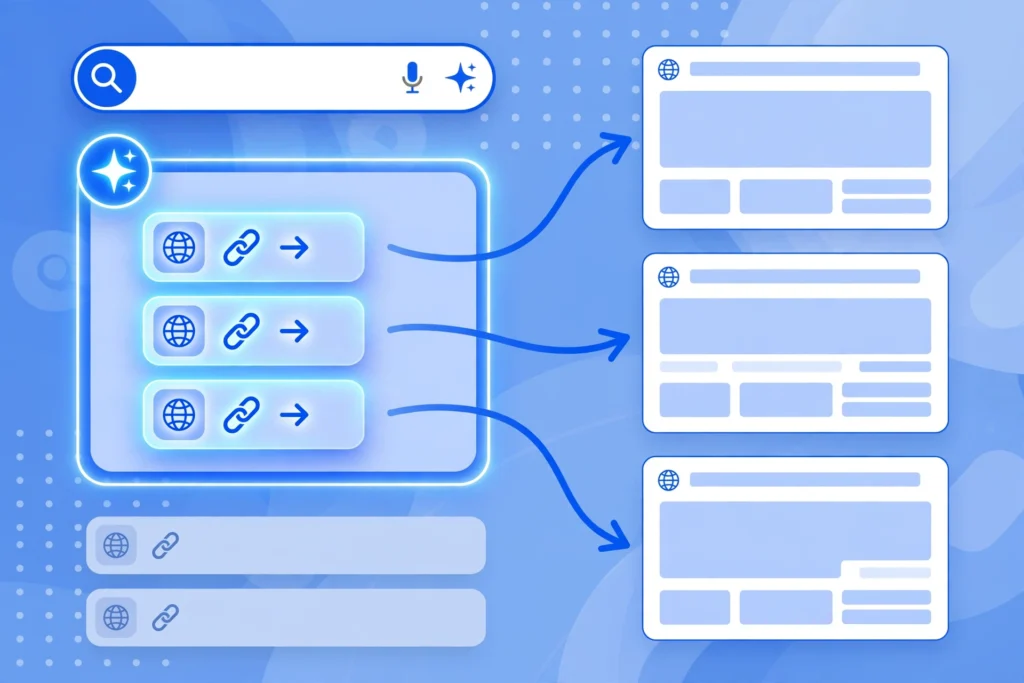
Google just changed the rules of AI search again — and this time, it’s good news for bloggers. On October 15, 2026, Google announced that links inside AI Overviews and AI Mode will become more prominent, more frequent, and positioned higher inside AI-generated answers. After months of zero-click searches draining publisher traffic, Google’s AI Overviews links update could finally send clicks back to real websites. Here’s what changed, and what you must do to win those clicks.
For the past year, bloggers watched in frustration as AI-generated answers sat on top of search results with barely any visible source links. Studies showed up to 68% of searches ending without a single click. This update is Google’s most direct response yet to publisher pressure — and if you act fast, it’s a real opportunity to reclaim traffic from your competitors.
What Is Google’s AI Overviews Links Update?
Hema Budaraju, Google’s VP of Product Management for Search, announced the changes in a blog post on October 15, 2026. The update affects Google AI Mode and AI Overviews, the AI-generated responses that appear above traditional search results. Here are the key changes:
- Inline links are more prominent: Google has increased the presence of clickable links inside AI-generated answers and is pushing them higher in the responses more frequently.
- Official-website spotlight: Google is testing a dedicated section at the top of certain AI answers highlighting one or two official websites relevant to the user’s task — such as the exact page needed to complete a booking or answer a question.
- News carousels expand: Prominent news-article carousels inside AI search experiences are rolling out to more locations and languages.
- Related links stand out: Links to related articles are becoming visually more prominent, making it easier to discover original sources from within the AI answer.
Google says the improvements are meant to help users “discover original sources, explore different perspectives and access relevant websites directly.” Translation for bloggers: the AI answer is no longer a dead end — it’s becoming a doorway to your site.
Why This Update Matters for Bloggers
To understand the stakes, look at what happened with our guide on how to rank in Google AI Overviews: ever since AI Overviews launched, fewer readers clicked through even when a site’s content powered the answer. Links were buried or invisible. With this update, the sites that feed the AI answer finally get visible credit — and traffic.
This is especially important for the trend called zero-click searches, where users get their answer from the AI summary and never visit any website. Bloggers who optimize to be cited inside AI answers can now realistically convert that citation into visits — if the content earns a prominent inline link.
5 Things Bloggers Must Do Right Now
1. Write content worth citing verbatim
AI Overviews pull from pages that answer questions directly and clearly. Start sections with a direct answer (one or two sentences), then expand with detail. Use question-based H2s and H3s that match real searches — “how to,” “what is,” and “best” queries get cited most. Our AEO guide for bloggers walks through this citation-first style step by step.
2. Structure for the featured spot
The new official-website section highlights one or two authoritative pages per query. To qualify, your page must be the clear best answer: a descriptive title, clean URL structure, fast load times, and content that fully resolves the query. Publish original data, examples, and screenshots — AI summaries prefer citing pages with specifics, not generic fluff.
3. Add schema markup
Structured data helps Google understand your content and trust it enough to cite. Article, FAQ, HowTo, and Review schema all increase your chances of becoming a linked source. You can generate ready-to-paste markup with KamiWeb’s free Schema Markup Generator tool in under a minute.
4. Target queries where links appear
Not every AI answer shows the same link formats. Informational and how-to queries are seeing the most prominent inline links and news carousels. Shift some of your publishing toward blog post ideas that get traffic in formats AI Overviews love: step-by-step guides, comparisons, definitions, and lists with real data.
5. Track your citations, not just rankings
Old-school rank tracking misses the new game. Monitor whether your pages are linked inside AI Overviews for your target queries. Search your keywords in an incognito window and check the AI answer’s inline links weekly. When a page gets cited, double down with internal links from related posts to boost its authority.
What About News Publishers?
The expanded news carousels are a separate signal: Google is putting timely, original reporting back in front of users inside AI experiences. If you publish news-style content — launches, updates, viral stories — make sure your posts have clear dates, author bylines, and original angles. Aggregated rewrites won’t make the carousel; reporting will.
The Bottom Line
Google’s AI Overviews links update won’t undo zero-click search overnight, but it is the first major reversal of the trend — and early movers will benefit most. Bloggers who write citation-worthy, well-structured, original content are positioned to turn AI answers into a new traffic channel instead of a traffic drain. Update your top 10 posts this week with direct answers, schema, and sharper structure, and watch whether AI Overviews start linking to you. The bloggers who adapt first are the ones who’ll win the click.